
INTRODUCTION
When it comes to flat roofs, the debate between TPO (Thermoplastic Polyolefin) and Hot Mop roofing is a common one.
Both are popular for different reasons, but deciding which is right for your roof depends on factors like cost, installation ease, durability, and climate considerations.
Let’s break it down in a way that’s simple, straightforward, and a bit fun!
COST: WHAT’S THE DAMAGE TO YOUR WALLET?
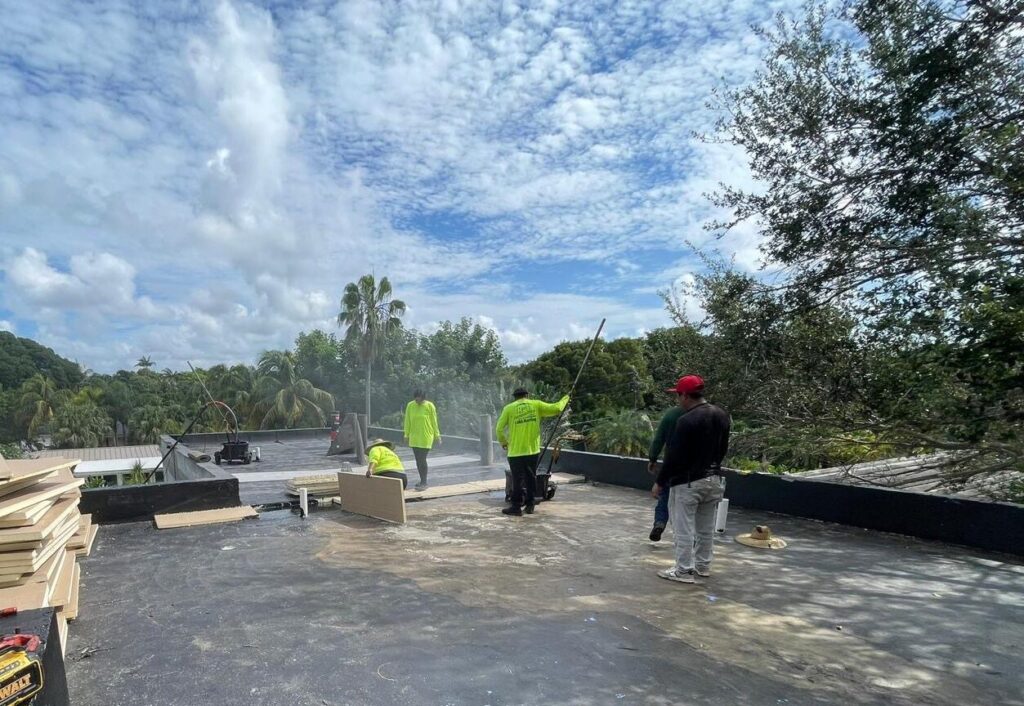
TPO roofing tends to have a wider price range. Depending on the specific materials and installation method, costs can vary between $4.50 to $16 per square foot. The higher-end costs are typically due to factors like roof size, the complexity of installation, or premium insulation. While this may sound pricey, TPO’s energy savings can offset those upfront costs over time
On the other hand, Hot Mop roofing is more budget-friendly upfront, with costs ranging between $2.75 and $5.75 per square foot. However, its lower price tag doesn’t always mean it’s the best value in the long run—its durability isn’t quite on par with TPO, so you may end up spending more on maintenance or replacement.
INSTALLATION: CLEAN AND EASY OR MESSY BUT RELIABLE?
Here’s where the two systems differ dramatically:
- TPO roofing is relatively easy to install. Thanks to its lightweight, large sheets, installation is quick, and fewer seams mean fewer potential leakage points. It’s also a versatile material, as it can often be applied over an existing roof, reducing tear-off costs.
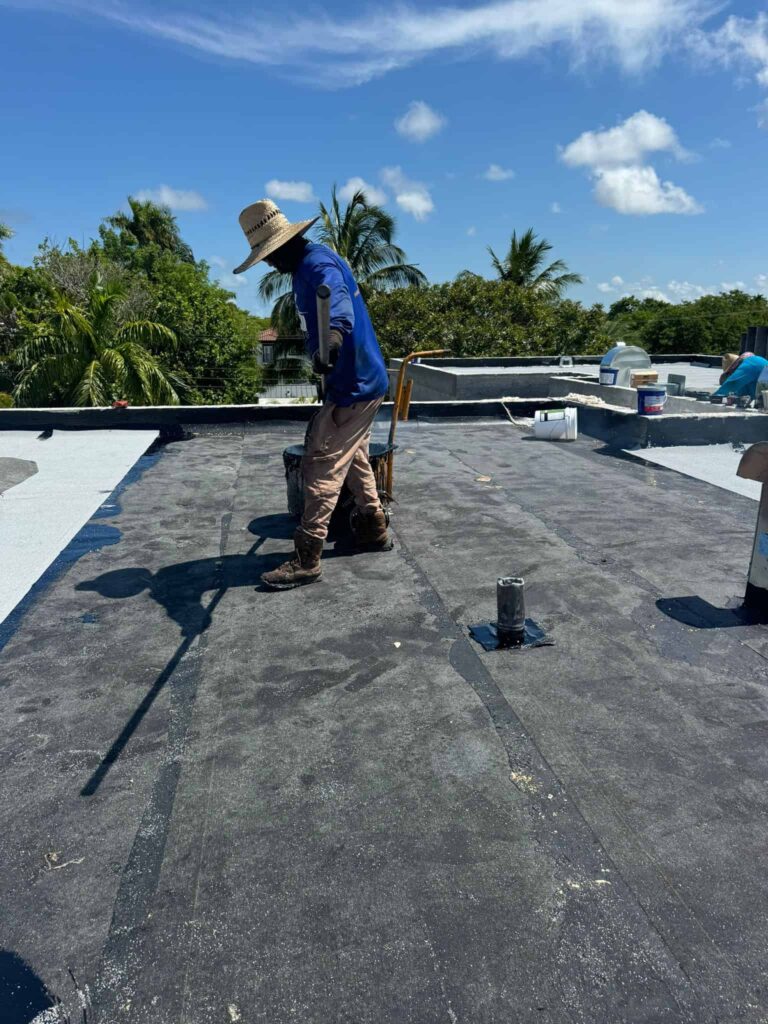
- Hot Mop roofing, in contrast, involves heating asphalt tar to 400°F and mopping it across layers of felt—think of it as a messy, multi-layer lasagna. While effective, this process is labor-intensive, messy, and comes with the challenge of strong odors and safety risks due to the hot materials involved. You’ll need experienced roofers to avoid potential mishaps.
*If speed and minimal disruption are important to you, TPO is the clear winner. However, Hot Mop has been around for over 100 years, proving its reliability, even if it’s not the cleanest or quickest method.
DURABILITY: HOW LONG WILL IT LAST?
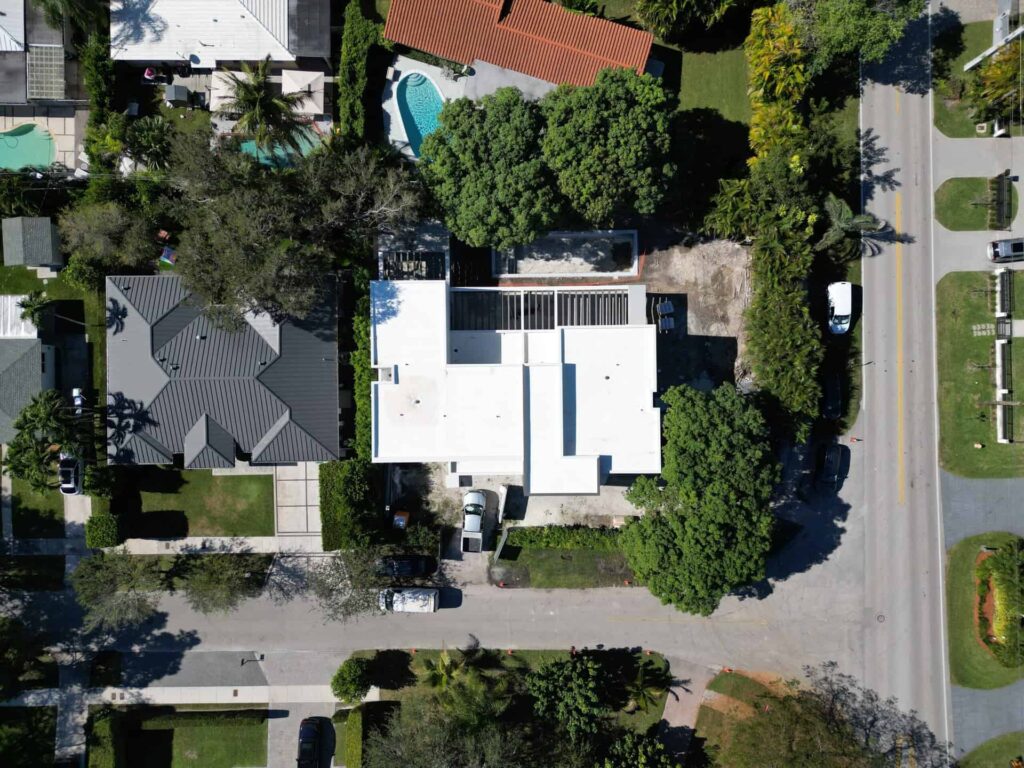
TPO roofing wins in the longevity game, often lasting over 20 years with minimal maintenance. It’s highly resistant to UV rays, tears, and punctures, making it an excellent option for areas with harsh sun exposure. Plus, its reflective surface can reduce energy costs by keeping your building cooler in the summer.
Hot Mop roofing holds its own in terms of weather resistance, offering 15 to 20 years of protection from the elements. It’s a reliable choice, especially in areas with heavy rainfall or snow. However, it’s not as UV-resistant as TPO, and over time, the sun can cause the asphalt to crack.
*If you’re looking for a long-lasting, low-maintenance option, TPO is the way to go.
ENERGY EFFICIENCY: WHO KEEPS YOU COOLER?

This is where TPO really shines. Its reflective surface helps bounce the sun’s rays away from your roof, keeping your building cooler in hot weather and lowering air conditioning costs. In fact, white TPO roofs are often ENERGY STAR® rated for their ability to improve energy efficiency.
Hot Mop roofing, on the other hand, is typically darker and absorbs more heat, meaning it won’t offer the same energy savings as TPO.
*So, if you’re in a hot climate, TPO might be the better investment for long-term energy efficiency.
MAINTENANCE: SET IT AND FORGET IT
TPO roofing requires very little maintenance. Its resistance to mold, dirt, and punctures means you won’t be spending much time—or money—on upkeep. Most issues that arise are due to extreme weather, but generally, a well-installed TPO roof will keep going with minimal intervention.
Hot Mop roofing, while durable, can require more frequent inspections and maintenance, especially in climates with high UV exposure, as the asphalt layers can crack or wear down over time.
THE FINAL VERDICT: WHICH SOULD YOU CHOOSE?
- Choose TPO if: You’re looking for a modern, energy-efficient, and long-lasting roofing material that’s easy to install and requires minimal upkeep. It’s particularly great in warmer climates where its reflective properties can save you on cooling costs.
- Choose Hot Mop if: You need a cost-effective solution for your flat roof, and you’re okay with a more labor-intensive installation process. Hot mop roofing is especially effective in colder or wetter climates where UV exposure isn’t as much of an issue.
*Ultimately, the choice between TPO and Hot Mop comes down to your specific roofing needs, budget, and long-term goals. Both have their strengths, but one may suit your situation better than the other.
STILL NOT SURE?
If you’re still on the fence about which option is right for your flat roof, don’t worry—that’s where the professionals come in.
A roofing contractor can assess your property, consider your climate, and recommend the best solution based on your unique needs.
Whatever you choose, both TPO and Hot Mop are reliable, time-tested options that will protect your property for years to come.