Demolition Preparation
Starting a new construction project is an exciting journey, but before building up, sometimes we must first take down. Demolition may seem straightforward, but there’s a lot of prep work that goes into ensuring a smooth, efficient, and safe process.
At AG General Contractor, we partner closely with architectural teams like MIK and GG to coordinate each critical step, making sure we don’t just get the job done, but we get it done right and on time. In this guide, we’ll walk you through our demolition checklist, share some essential insights, and highlight how we lead clients smoothly through the entire demolition process.
Working Hand-in-Hand with MIK and GG – Our Partners in Precision
To ensure a project kicks off on the right foot, we need more than just heavy machinery; we need thorough planning and expert collaboration. That’s where our partners, MIK Architecture and GG Estate, come in. While GG Estates handles ownership proofs and MIK Architecture oversees permit applications, we work to manage on-the-ground logistics, securing demolition bids, coordinating utility disconnects, and preparing the site. This collaborative effort ensures each task flows seamlessly into the next.
Fun Fact:
Did you know that some buildings in the United States have taken over a year to demolish due to permit delays and environmental considerations? Our team works diligently to shorten this timeline by getting ahead of these tasks wherever possible.
Steps to Take Before a Demolition – Key Preparations for a Smooth Start
To start a demolition on schedule, we take proactive measures long before the green light. Here’s a rundown of the key steps we take:
- Requesting and Evaluating Bids: We begin by sending demolition requests to reputable companies in our database, making sure each bid aligns with the scope, schedule, and specific requirements of the project. Once bids are received, we compile a report and consult with the client to make an informed selection.
- Utility Disconnections: For a safe demolition, all utilities must be securely disconnected. We coordinate with trusted subcontractors to handle Freon recovery, electrical shutdown, plumbing cap-offs, and gas service disconnections.
- Obtaining Required Permits: Permits are usually the most time-sensitive part of the demolition process, often influenced by external factors like municipal timelines and zoning restrictions. While MIK navigates this paperwork maze, we focus on getting other components ready so that, once permits are approved, demolition can begin without delay.
The AG General Contractor Demolition Checklist
Our project managers rely on a well-structured demolition checklist to keep each stage on track. This list isn’t just a formality—it’s a tool for keeping every task accounted for, in a way that lets us adapt to any project-specific requirements. Here’s what goes into our process:
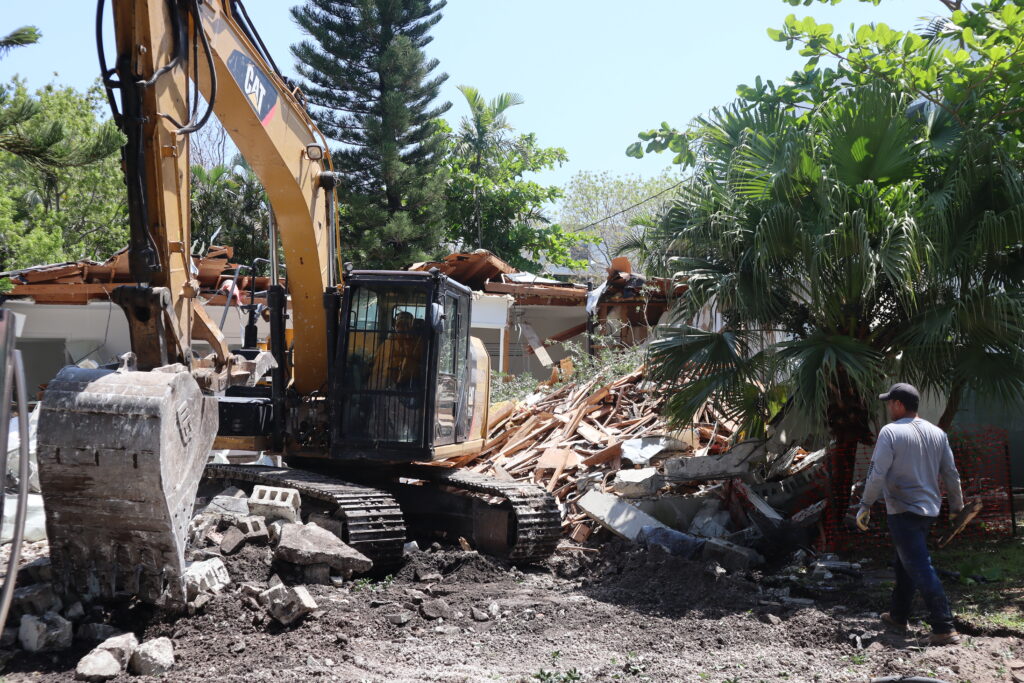
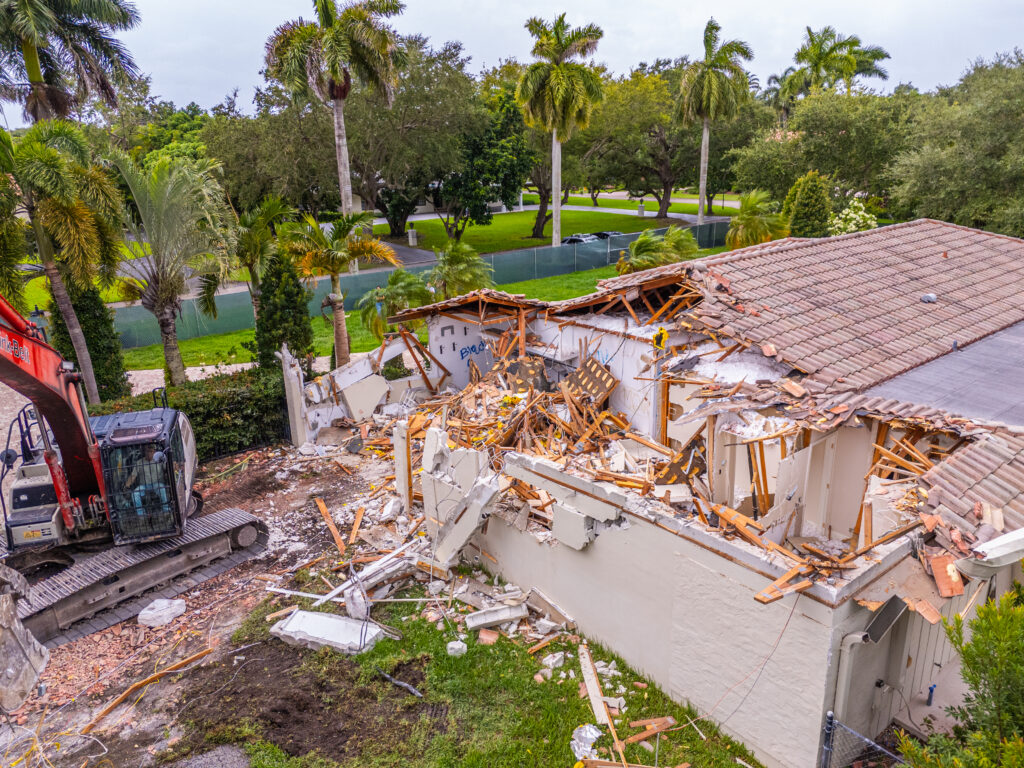
1. Demolition Bidding
- Sending Out Requests: We start by reaching out to demolition companies in our database.
- Report Creation: Once we gather bids, a bidding report is made, summarizing costs, scope, and timelines.
- Final Selection and Notifications: After we
a clientselect the demolition company, we send an award email to the chosen contractor and notify the others of the decision.
2. Permit Process Tasks
- Proof of Ownership: GG estate provides proof of ownership documentation, such as a Warranty Deed or Closing Statement.
- Environmental and Structural Reviews: This includes getting an asbestos report and obtaining a digital survey, which must be current within the last 12 months.
- Utility Disconnects: All utility disconnections (like Freon, electric, plumbing, and gas) are coordinated with specific contractors. This also includes confirmation letters from providers like FPL (Florida Power & Light).
3. Floating Meter Requests
Floating meters are essential for demolition to minimize dust. Also, to keep track of utility usage after demolition. Our project managers coordinate with WASD (Water and Sewer Department) to obtain a new floating meter.
4. Site Preparation
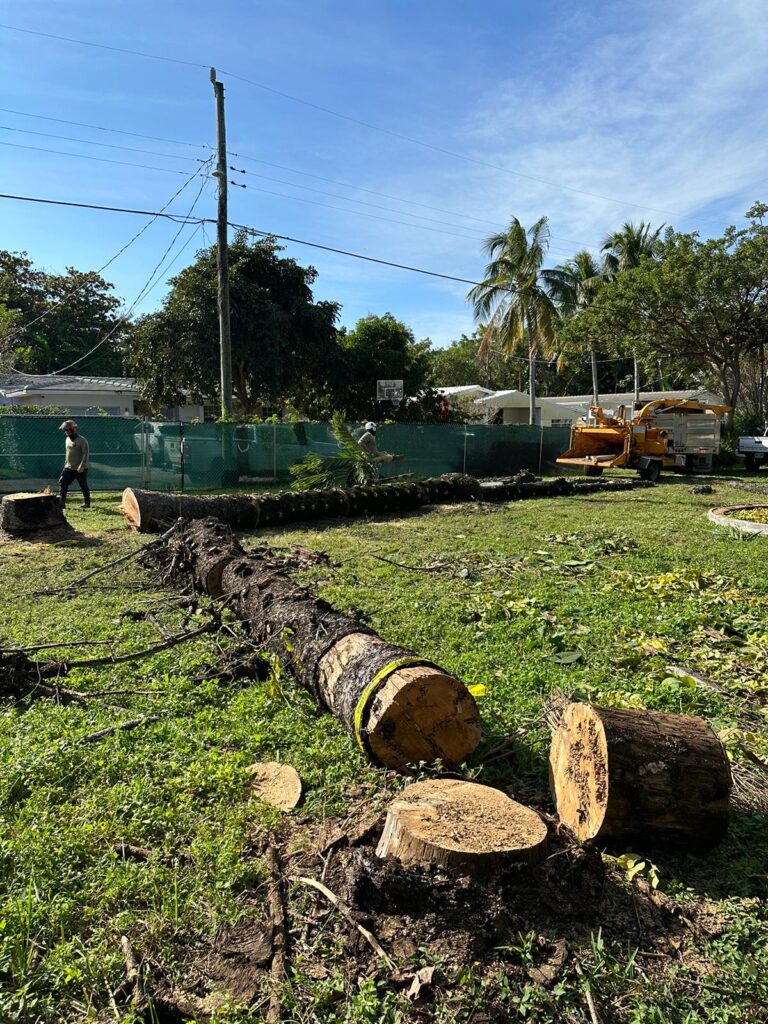
- Tree Protection: In line with city guidelines, we protect existing trees on-site with temporary fencing.
- Installing Temporary Fencing: This helps keep the site safe from unauthorized access.
Pro Tip:
Permits can often hold up a project, but by jumping ahead on tasks, such as utility disconnects and floating meter requests, we reduce the waiting time once permits are secured.
The Impact of External Factors on Demolition Timing
While our team moves quickly on tasks within our control, some factors—like permit approvals—are out of our hands. Knowing this, we strive to tackle each task in the demolition checklist as early as possible. Here’s a breakdown of how external factors impact timelines:
- PermitsPermits are the usual bottleneck in demolition timelines. This step is dependent on municipal offices, zoning laws, and sometimes even historical preservation boards. The good news? We handle the other aspects, like site prep and utility disconnection, so we’re ready to break ground as soon as approval arrives.
- Weather ConditionsHeavy rains or storms can delay certain steps in demolition, such as site clearing or fencing installation. Our project managers keep an eye on weather forecasts and adjust timelines as needed.
- Environmental RestrictionsCertain properties, especially those located near water bodies or protected ecosystems, may face additional environmental restrictions. In such cases, additional clearances are needed.
Fun Fact:
In cities like Miami, some trees are protected by law, meaning they can’t be cut down even for construction. This is why our demolition checklist includes protective fencing around certain trees!
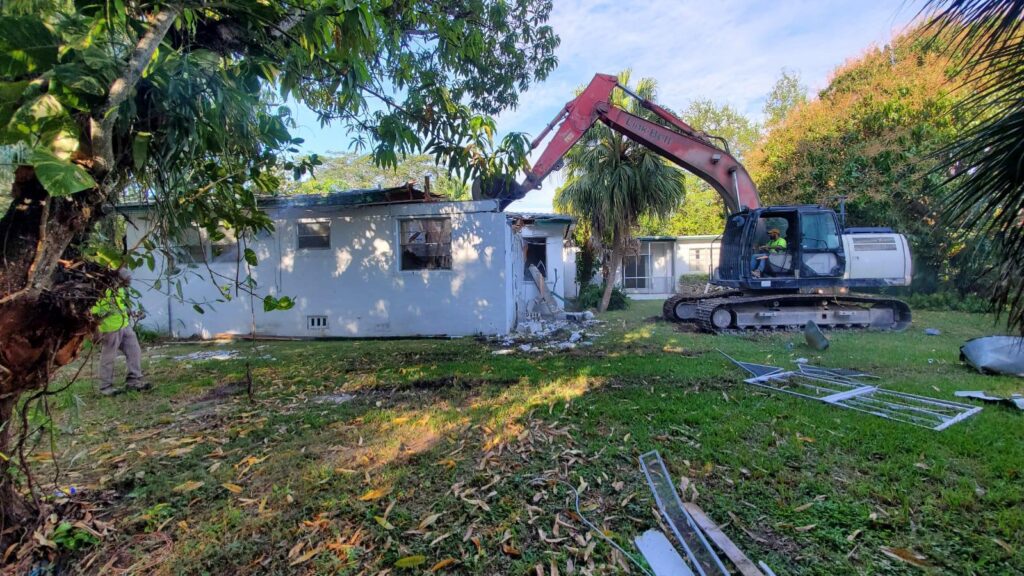
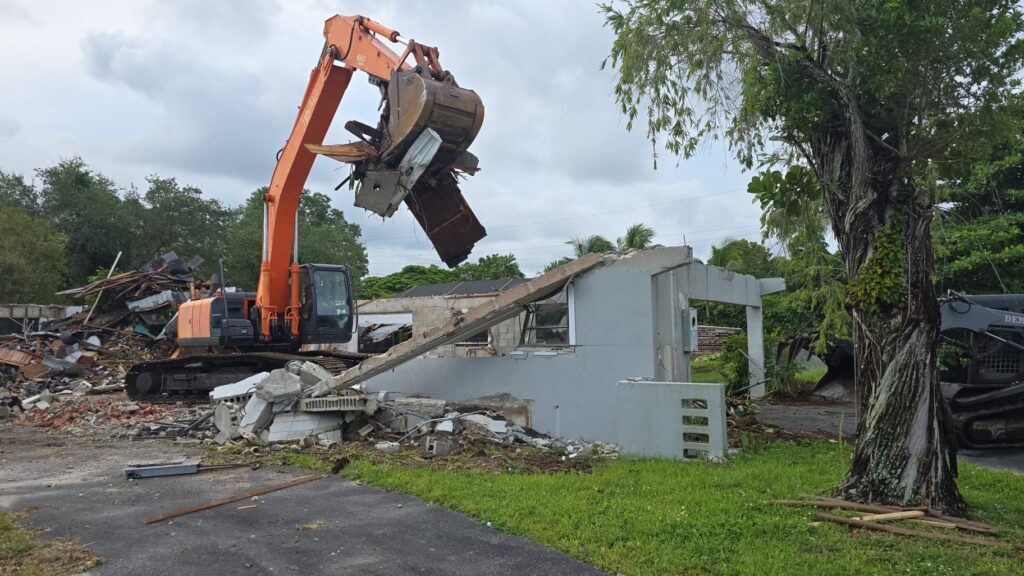
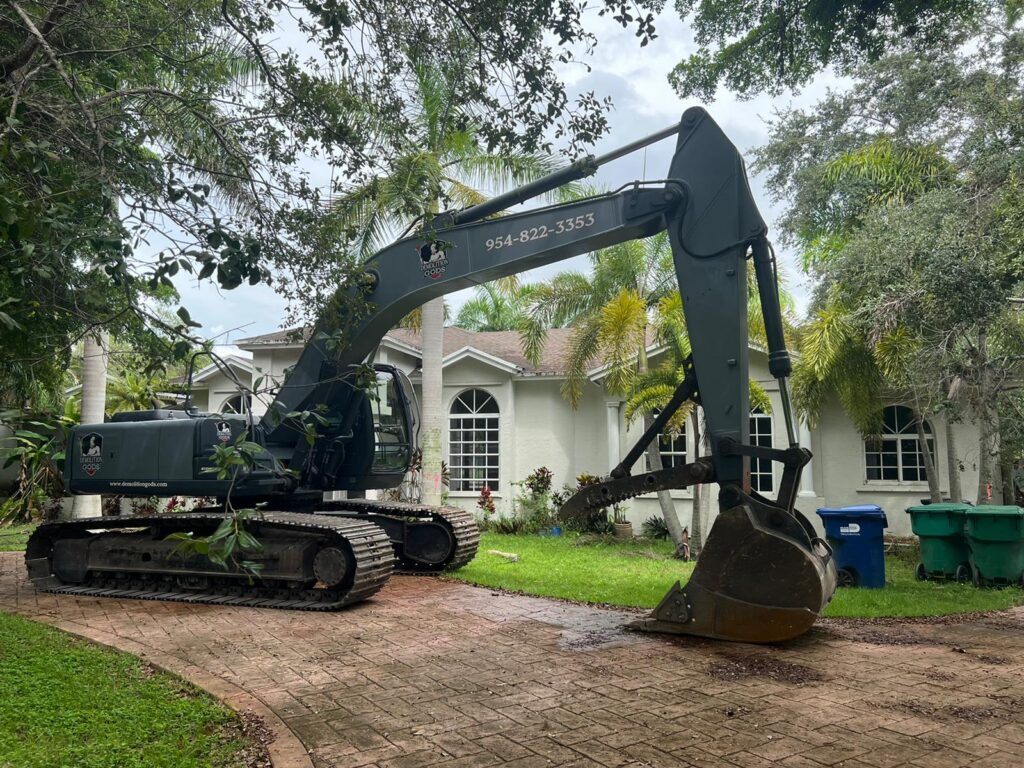
Demolition Safety Measures – Keeping Projects Safe and Compliant
Safety is our top priority. Our demolition process adheres to strict safety protocols to prevent accidents and ensure compliance with local regulations. Here’s a quick overview of our approach to demolition safety:
- Personal Protective Equipment (PPE)From hard hats to safety goggles and steel-toed boots, our teams are equipped with all necessary PPE for on-site safety.
- Environmental SafetyFrom asbestos testing to hazardous material removal, we work with environmental experts to make sure the area is safe for demolition.
- Perimeter SecurityTemporary fencing and signage are used to create a secure perimeter around the demolition zone, ensuring that only authorized personnel have access.
Fun Fact:
In Japan, demolition companies sometimes use a “reverse construction” technique, where they start deconstructing from the top down. This minimizes dust and noise, making it ideal for dense urban areas!
The AG General Contractor Advantage
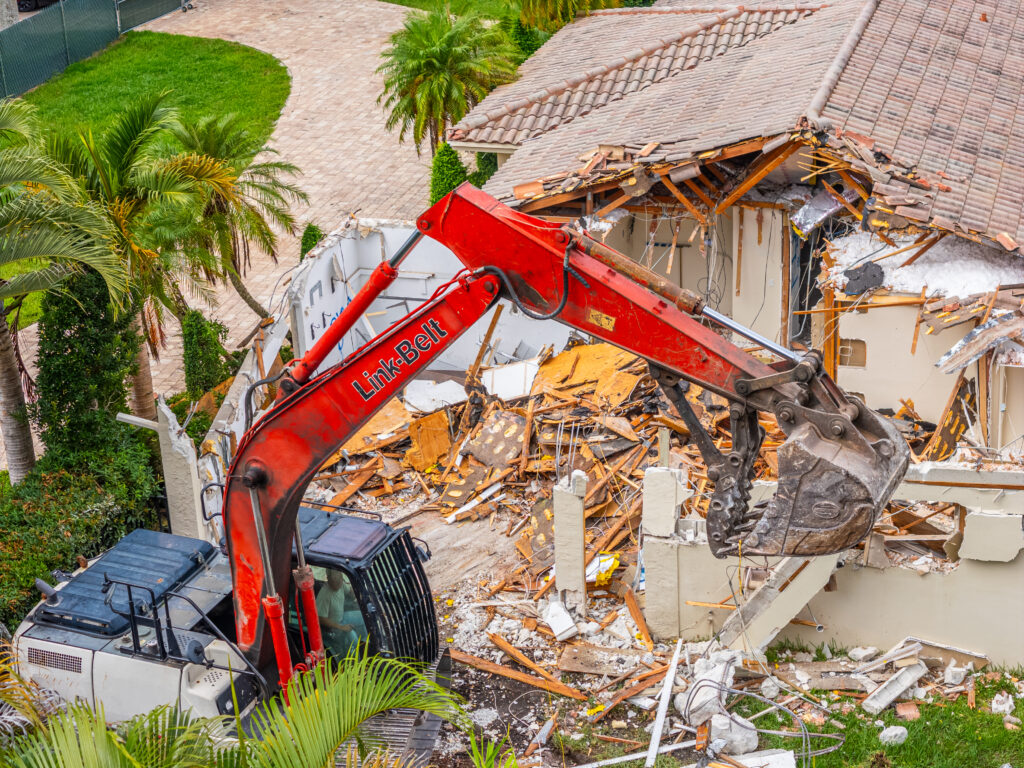
At AG General Contractor, we go above and beyond for our clients, guiding them every step of the way. Here’s what sets us apart:
- Experienced Team: With a wealth of experience in construction and demolition, we anticipate potential delays and tackle issues before they arise.
- Clear Communication: From regular updates to transparency about progress and delays, we make sure clients are never left guessing.
- Commitment to Excellence:We know that every step of the demolition process affects the future build. That’s why we approach every task, from utility disconnections to site prep, with the utmost care.
Fun Fact:
The tallest building ever demolished was the Singer Building in New York City, which stood at 612 feet! While we don’t typically deal with skyscrapers, we bring the same level of professionalism to every project, large or small.
Conclusion
Demolition is more than just tearing down walls—it’s a strategic, detail-oriented process that lays the foundation for a successful build. At AG General Contractor, we see ourselves as more than just a service provider; we’re a partner, a guide, and a trusted resource for each client’s construction journey. With our demolition checklist and expert team, we ensure that when it’s time to build up, there’s nothing standing in your way.
Ready to take the first step toward your next construction project? Contact us today to learn how we can make your demolition phase efficient, safe, and successful.